
Hydraulic systems are widely used across industries because they can deliver high force, precise movement, and reliable performance. From manufacturing machinery and CNC equipment to hydraulic power packs and industrial systems, hydraulic equipment depends heavily on the condition of its hydraulic oil. When oil temperature rises beyond the recommended operating range, the entire system can experience performance issues, accelerated component wear, and reduced efficiency.
This is where Hydraulic Oil Coolers play an important role.
Hydraulic Oil Coolers are designed to remove excess heat from hydraulic oil and maintain the oil at a suitable operating temperature. By controlling oil temperature, these cooling systems help hydraulic equipment operate more efficiently and consistently while supporting longer service life for critical components.
For industries that operate hydraulic machinery continuously or under demanding loads, selecting the right cooling solution is not simply an option—it is an important part of maintaining system reliability.
What Are Hydraulic Oil Coolers?
Hydraulic Oil Coolers are heat-exchange devices used to reduce the temperature of hydraulic fluid in a hydraulic system. During operation, hydraulic pumps, motors, valves, cylinders, and other components generate heat. Some of this heat comes from pressure losses, friction, and inefficiencies within the system.
If this heat is not removed effectively, the hydraulic oil can become excessively hot.
High oil temperature can affect viscosity, lubrication, seals, and component performance. It may also increase oxidation and shorten the useful life of hydraulic fluid.
A hydraulic oil cooler transfers heat from the hydraulic oil to another cooling medium, usually ambient air or water. Depending on the application, system design, environmental conditions, and available utilities, industries can choose between different cooler configurations.
One of the most widely used options is the Air Cooled Oil Cooler, which uses ambient air to dissipate heat from the hydraulic oil.
Why Hydraulic Oil Temperature Matters
Temperature control is critical in hydraulic systems because hydraulic oil performs several functions simultaneously. It transmits power, lubricates components, helps protect against corrosion, and carries heat away from internal components.
When the oil becomes too hot, its viscosity may decrease. This can affect lubrication and increase internal leakage in certain hydraulic components. Excessive temperature can also accelerate fluid degradation and damage seals and other system components.
On the other hand, maintaining the oil within its recommended operating range can provide several benefits, including:
- Better hydraulic system efficiency
- Improved lubrication
- Reduced component wear
- Longer oil service life
- More consistent machine performance
- Reduced maintenance requirements
- Better protection of pumps and valves
- Improved overall equipment reliability
For this reason, choosing properly sized Hydraulic Oil Coolers is an important engineering decision.
Air Cooled Oil Cooler: A Practical Industrial Solution
An Air Cooled Oil Cooler uses ambient air to remove heat from hydraulic oil. A fan forces or draws air through a heat-transfer core, allowing heat from the hydraulic oil to dissipate into the surrounding atmosphere.
This configuration is popular in industrial applications because it does not require cooling water. That can simplify installation and maintenance, especially in facilities where water availability is limited.
A typical air-cooled hydraulic oil cooler consists of:
- Heat exchanger core
- Electric or hydraulic fan
- Protective housing or frame
- Hydraulic oil inlet and outlet connections
- Mounting arrangement
- Optional temperature switch or bypass arrangement
The actual configuration depends on the required heat-dissipation capacity, oil flow rate, operating pressure, ambient temperature, and installation environment.
For engineers, selecting an air-cooled unit should involve more than simply comparing physical dimensions. Thermal performance, pressure drop, airflow, noise, fan capacity, material selection, and operating conditions should all be evaluated.
How Do Hydraulic Oil Coolers Work?
The working principle is straightforward but highly important.
Hot hydraulic oil enters the cooler through the inlet connection. Inside the heat exchanger, the oil passes through passages designed to maximize heat transfer. At the same time, a fan moves ambient air across the external surfaces of the cooler.
Heat moves from the hot hydraulic oil through the heat-transfer surfaces and into the surrounding air.
The cooled oil then leaves the cooler and returns to the hydraulic circuit.
This continuous process allows the system to remove unwanted heat while maintaining a more stable operating temperature.
In an air-cooled configuration, the effectiveness of heat transfer depends on several factors, such as:
- Hydraulic oil flow rate
- Oil inlet temperature
- Required oil outlet temperature
- Ambient air temperature
- Airflow volume
- Heat-transfer surface area
- Cooler core design
- Hydraulic pressure and pressure drop
A correctly engineered cooler balances all these parameters to provide reliable thermal performance.
Applications of Hydraulic Oil Coolers
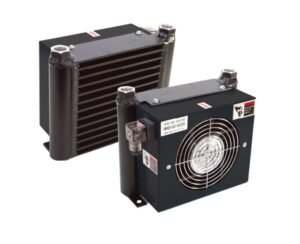
Hydraulic Oil Coolers are used in a wide range of industrial and mobile applications. Wherever hydraulic equipment generates significant heat, an effective cooling solution may be required.
Some common applications include:
Hydraulic Power Packs
A Hydraulic Power Pack Oil Cooler helps control the temperature of hydraulic oil used in power-pack systems. Power packs can operate for extended periods and may experience considerable heat generation depending on pressure, flow, duty cycle, and application.
Installing an appropriately sized oil cooler can help maintain stable operating conditions and reduce thermal stress on the hydraulic system.
CNC Machines
Modern CNC machines often require reliable temperature control for consistent operation. An Oil Cooler for CNC Machine applications can help manage heat generated by hydraulic systems used for clamping, tool changing, lubrication, and other machine functions.
Stable oil temperature can contribute to consistent hydraulic performance and help reduce unnecessary downtime.
Industrial Machinery
Manufacturing equipment, presses, injection molding machines, machine tools, compressors, and other industrial equipment may use hydraulic systems that generate substantial heat.
An Industrial Oil Cooler can provide continuous heat removal and support reliable machine operation.
Mobile Hydraulic Equipment
Construction and agricultural machinery can also require hydraulic oil cooling. Excavators, loaders, cranes, drilling equipment, and similar machines may operate under demanding loads and varying environmental conditions.
For such applications, cooler selection needs to consider ambient temperature, available airflow, vibration, contamination, and operating duty.
Choosing the Right Hydraulic Oil Cooler
Selecting a hydraulic oil cooler should be based on the actual requirements of the hydraulic system rather than selecting a unit based only on oil flow.
Engineers typically need to evaluate several parameters.
1. Heat Load
The first consideration is the amount of heat that needs to be removed. The cooler must have sufficient thermal capacity for the application.
An undersized cooler may not control oil temperature effectively, while an unnecessarily oversized cooler can increase equipment cost and physical installation requirements.
2. Oil Flow Rate
Hydraulic oil flow directly affects heat-transfer performance. The cooler should be capable of handling the required flow without creating excessive pressure drop.
3. Operating Pressure
The cooler must be compatible with the hydraulic circuit pressure. Different applications may require different cooler constructions and pressure ratings.
4. Ambient Temperature
Air-cooled systems depend on ambient air for heat rejection. Therefore, the maximum surrounding temperature should be considered during cooler selection.
A cooler operating in a hot industrial environment may require greater heat-transfer capacity than the same hydraulic system operating in a cooler environment.
5. Installation Space
Available installation space is another important factor. The cooler needs adequate airflow and clearance for proper heat dissipation.
Engineers should also ensure that the cooler can be accessed for cleaning, inspection, and maintenance.
6. Operating Environment
Dust, oil mist, moisture, chemicals, and other contaminants can affect cooler performance. Industrial environments may require specific core designs, protective arrangements, or maintenance strategies.
Benefits of Using Hydraulic Oil Coolers
A properly selected hydraulic cooling system offers several advantages.
Improved System Reliability
Maintaining suitable hydraulic oil temperature can reduce thermal stress and help hydraulic components operate within their intended conditions.
Extended Component Life
Excessive heat can accelerate wear and fluid degradation. Effective cooling can help protect pumps, valves, seals, and other hydraulic components.
Better Oil Life
High temperatures can accelerate hydraulic oil oxidation. By controlling operating temperature, an oil cooler can help reduce thermal degradation and support longer fluid service intervals, subject to the manufacturer’s recommendations.
Reduced Downtime
Overheating can contribute to hydraulic system failures and unplanned shutdowns. Proper temperature management can improve machine availability.
Consistent Performance
Hydraulic systems often perform more consistently when oil temperature remains within an appropriate operating range. This can be particularly valuable for precision machinery and continuous-production applications.
Hydraulic Oil Cooler Manufacturer: What Should You Look For?
Choosing the right Hydraulic Oil Cooler Manufacturer is as important as selecting the correct cooler capacity.
A reliable manufacturer should understand hydraulic applications and provide solutions based on actual operating conditions rather than offering only standard products.
Before selecting an Oil Cooler Manufacturer, consider factors such as:
- Product engineering capability
- Heat-transfer performance
- Quality of materials
- Manufacturing standards
- Pressure and flow requirements
- Customization options
- Testing procedures
- Technical support
- After-sales service
- Availability of replacement components
For specialized industrial applications, customization can also be important. The manufacturer may need to modify the cooler based on mounting dimensions, connections, heat load, fan configuration, operating pressure, or environmental requirements.
Hydraulic Oil Coolers vs. Water-Cooled Systems
Hydraulic cooling systems are generally available in air-cooled and water-cooled configurations.
An air-cooled system uses ambient air to remove heat, while a water-cooled system transfers heat to cooling water.
An Air Cooled Oil Cooler can be particularly useful where:
- Cooling water is unavailable
- Water treatment is expensive
- Easy installation is preferred
- A standalone cooling solution is required
- Outdoor or mobile equipment is involved
Water-cooled systems may be appropriate where a reliable cooling-water supply already exists and high heat-rejection requirements make water cooling advantageous.
The right choice depends on the application, operating environment, available utilities, installation requirements, and lifecycle cost.
Air Cooled Heat Exchanger Technology
An Air Cooled Heat Exchanger operates on the same fundamental heat-transfer principle: removing heat from a process fluid using ambient air. Hydraulic Oil Coolers
In hydraulic applications, specialized air-cooled heat exchanger designs are engineered to handle hydraulic oil flow and operating conditions.Hydraulic Oil Coolers
The heat-transfer core is an important part of the system. Its geometry, materials, surface area, and airflow characteristics influence overall performance.
For engineers, the goal is not simply to maximize heat-transfer area. The complete design must balance thermal performance with pressure drop, fan power, physical size, noise, durability, and maintenance requirements.
Maintenance of Hydraulic Oil Coolers
Even a high-quality hydraulic oil cooler requires regular maintenance.
Hydraulic Oil Coolers
Hydraulic Oil Coolers
Hydraulic Oil Coolers
Hydraulic Oil Coolers
For air-cooled systems, one of the most common maintenance concerns is contamination of the cooler core. Dust, dirt, fibers, and other particles can accumulate on heat-transfer surfaces and restrict airflow.
Regular inspection should include:
- Cleaning the cooler core when required
- Checking fan operation
- Inspecting electrical connections
- Checking hydraulic connections for leakage
- Monitoring oil temperature
- Inspecting mounting hardware
- Checking for unusual vibration or noise
- Maintaining proper airflow around the cooler
Maintenance frequency should be determined by the operating environment and equipment duty cycle.
In dusty industrial environments, cooler cleaning may need to be performed more frequently.
Common Mistakes When Selecting an Oil Cooler
Several mistakes can reduce cooling performance.
One common mistake is selecting a cooler based only on hydraulic oil flow while ignoring actual heat load and ambient temperature.
Another is installing the cooler in a location where airflow is restricted. Even a high-performance cooler may struggle if hot air cannot escape or if the air inlet is blocked.
Ignoring pressure drop can also create problems. The cooler should be selected so that hydraulic flow and system pressure remain within acceptable limits.
Finally, maintenance requirements should be considered before installation. A cooler that cannot be easily accessed for cleaning may become difficult to maintain in a demanding industrial environment.
Why Invest in Quality Hydraulic Oil Coolers?
Hydraulic systems are often critical to production. A cooling component may represent a relatively small part of the complete hydraulic installation, but its impact on system reliability can
Hydraulic Oil Coolers
Hydraulic Oil Coolers
Hydraulic Oil Coolers
Investing in a properly designed hydraulic cooling solution can help manufacturers and plant operators reduce thermal problems, improve equipment availability, and protect expensive hydraulic components.
A good cooling system should be considered as part of the overall hydraulic system design—not as an afterthought.
Final Thoughts
Hydraulic Oil Coolers are an essential part of many modern hydraulic systems. By efficiently removing excess heat, they help maintain suitable oil temperature and support reliable operation of pumps, valves, motors, cylinders, and other hydraulic components.
From an Air Cooled Oil Cooler for industrial machinery to a specialized Hydraulic Power Pack Oil Cooler or Oil Cooler for CNC Machine, the correct solution depends on the specific requirements of the application.
Working with an experienced Hydraulic Oil Cooler Manufacturer can make the selection process easier and ensure that factors such as heat load, oil flow, operating pressure, ambient temperature, airflow, installation space, and maintenance are properly considered.
For demanding industrial applications, a well-engineered Industrial Oil Cooler can provide the thermal performance and reliability required for continuous operation.
If you are looking for a dependable cooling solution for your hydraulic system, choose a manufacturer that combines engineering knowledge, quality manufacturing, application expertise, and technical support. The right hydraulic oil cooler can make a meaningful difference in equipment performance, maintenance requirements, and long-term operating reliability.